
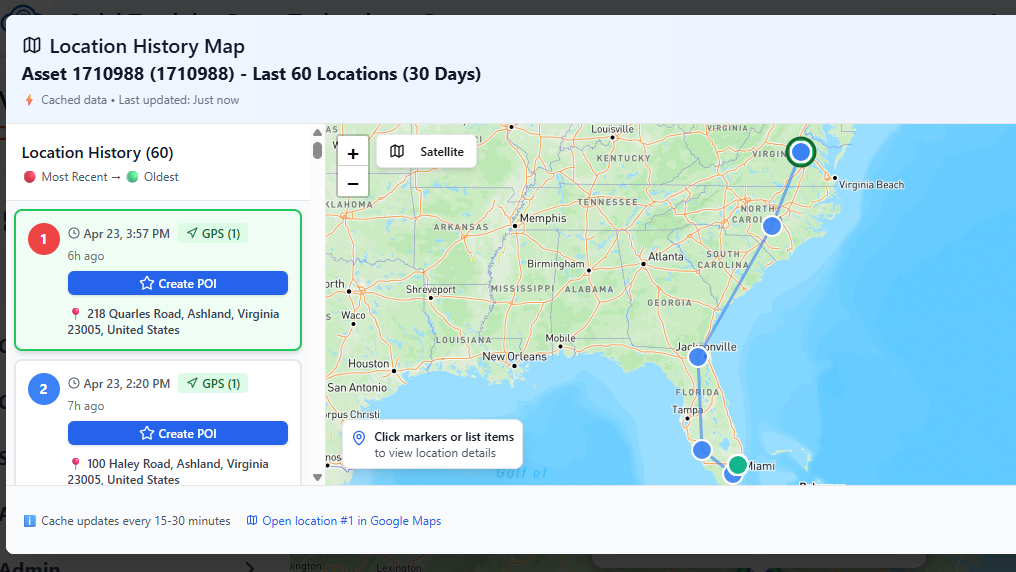
Anyone with cart-loss experience knows carts travel FAR. We've recorded carts crossing international borders. Even with outliers removed, our weekly off-premise reporting shows 43% of off-property carts sit more than half a mile from their store — and they don't stay put; carts drift progressively farther over time.
That half-mile line is where most tracking radio quietly dies. A Wi-Fi router covers 100–150 feet — you own several just to cover your house. LPWAN options like LoRa advertise miles of range, but that's line-of-sight marketing; in real commercial terrain they deliver a half mile or less. Any gateway-based system has the same flaw: the network stops where your infrastructure stops, and the cart keeps rolling.
A tracking technology has to guarantee one thing: you can see every cart no matter where it goes. That's what determines whether your retrieval program produces an ROI, on two fronts:
Efficiency — does a day of collection bring back 10 carts or 30? Sending drivers to search for carts is payroll spent guessing.
Efficacy — of everything missing, what share actually comes home per run?
You can't win either metric with a radio that loses the cart at the property line. Cellular coverage is global; there is no range cap. One of our retail partners recently went out for 29 carts and came back with 31 — several were miles out and had been gone for weeks. Their retrieval success runs consistently above 85%, and stores using QuickTrack's routed recovery average 92% run success.
See the radio-by-radio comparison at STG vs LoRa and vs generic GPS trackers — or go straight to QuickTrack.