
AirTags and Tiles are "finder" devices: short-range Bluetooth tags that don't know where they are. They rely on a nearby smartphone to infer the location for them. For a finder to report a cart's position, all of this must be true at once: the cart is within ~75 feet of participating phones, those phones have Bluetooth on, and their owners are opted into the crowd-finding network with location services enabled.
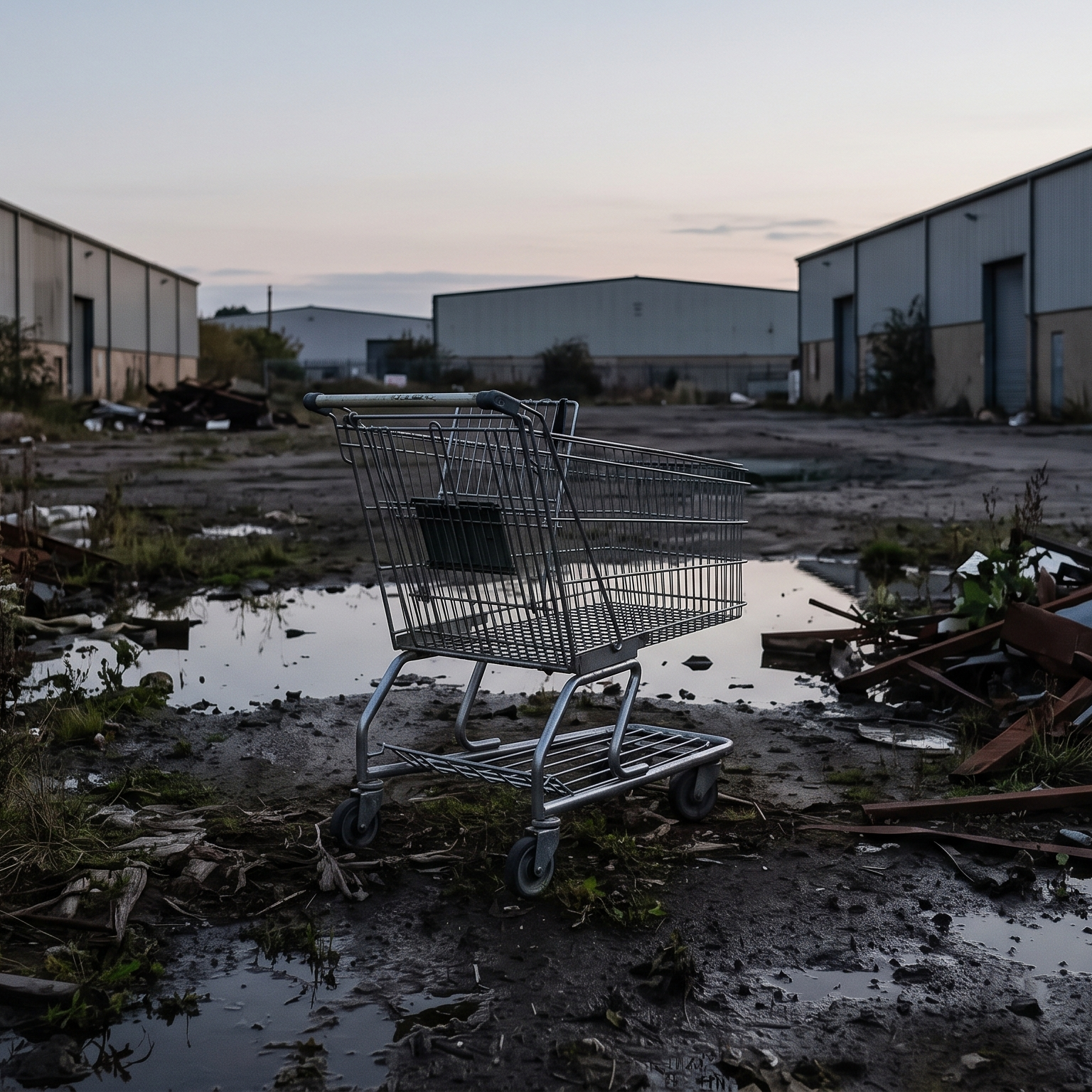
Now think about where stolen carts actually sit: industrial lots, scrap yards, vacant properties, drainage ditches. Not exactly iPhone-dense territory. The finder network is weakest precisely where lost assets are likeliest to be — and anyone can opt their phone out of relaying. A finder tells you where a cart was, the last time a stranger's phone happened to walk past it.
Purpose-built trackers work the other way around. The device determines its own location using satellite positioning (GPS/GNSS) plus Wi-Fi scanning as a power-efficient assist in dense areas, then reports over cellular — the same architecture trusted for pharmaceuticals, heavy equipment, and emergency-services tracking. No bystander phones required. Intelligent scheduling of location fixes stretches battery life to multiple years on replaceable batteries; Bluetooth tags rarely clear one year, and few use replaceable batteries — you'll buy three or four tags per asset over the life of one tracker.
And finding was never the whole job. A dot on a map doesn't run an LP investigation. QuickTrack records timestamped location history — a breadcrumb trail of every point a stolen asset visited, not just where it sits now. That history pairs with camera footage, supports case-building, and feeds geofence alerts the moment a cart leaves. Finder tags support none of that.
Full teardown at STG vs AirTags — and see what fleet-grade tracking looks like at QuickTrack.