
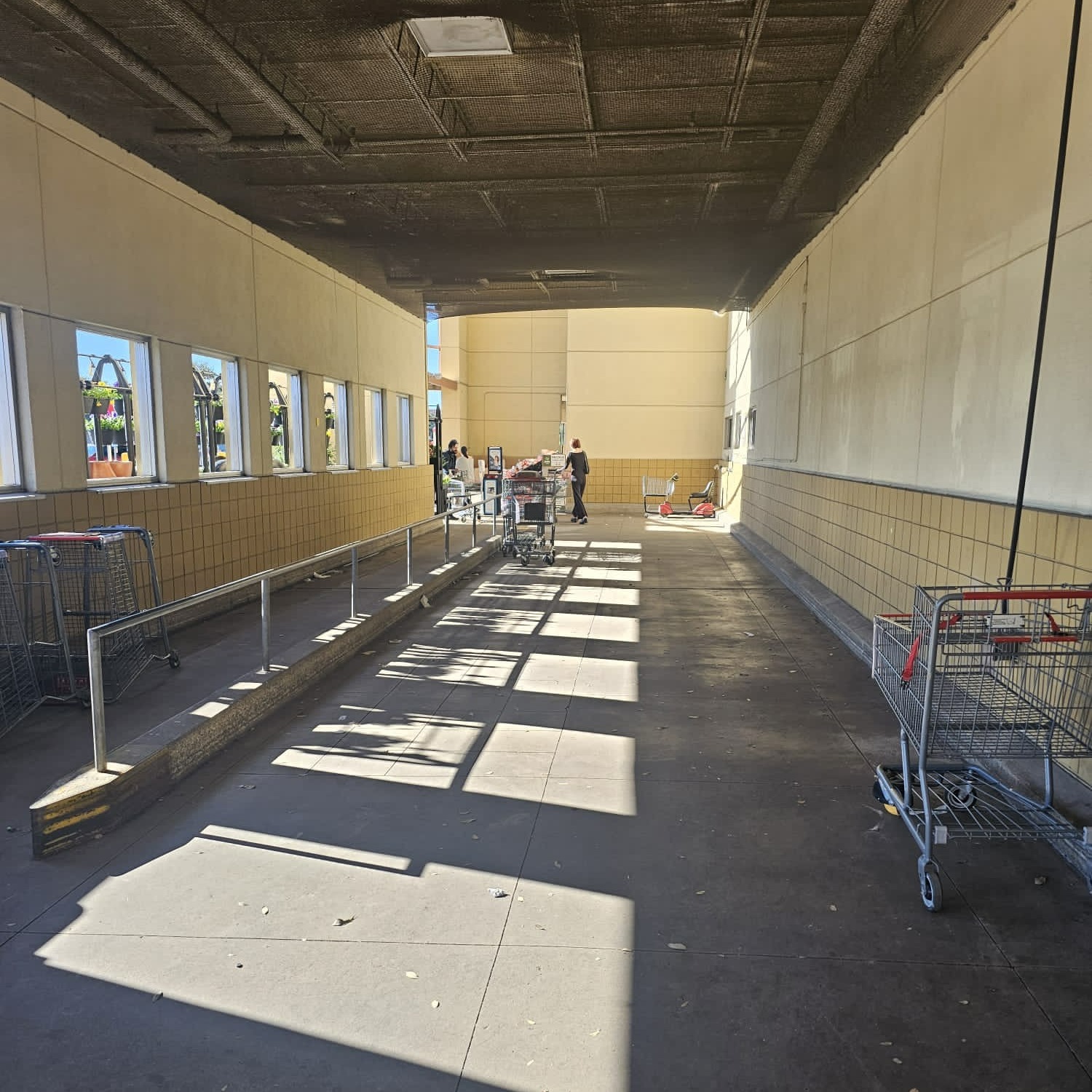
Most retailers book a lost cart as a $150–$250 replacement and move on. That's the wrong number. A cart is the vehicle for customer spend — if your average basket is $75+, carts are the load-bearing infrastructure of your revenue. When a customer can't get one, one of two things happens: they shop with their arms and the basket shrinks to what they can carry, or they walk — taking their entire stock-up trip to a competitor who has carts.
The bleed is gradual, then sudden. Lose 5% of your fleet a month and in five months a quarter of your carts are gone — enough for roughly a 3% sales drop at a high-volume store. But lost sales grow exponentially as the fleet shrinks, because every missing cart deepens the shortage at exactly the peak hours when every cart is in play:
We watched a $1M-per-week store hit a pre-storm rush with a badly depleted cart fleet. That single day plausibly cost six figures. And the trap is timing: replacement carts take weeks to months to arrive, and you have to notice the shortage before you can order — by which point you've been quietly losing sales for a quarter.
For most stores the tipping point is 25–37% fleet loss — below it the sales impact hides in noise, above it the revenue line bends visibly. The entire game is staying under that line, which takes two capabilities: seeing loss as it happens instead of at year-end inventory, and getting carts back fast instead of reordering. That's the job QuickTrack does outdoors — find and route every off-property cart home — while CartTrack handles the indoor side: live fleet counts and utilization so a shrinking fleet can't sneak up on you.
Want your store's actual numbers? The savings calculator models your fleet size, loss rate, and basket economics in about 30 seconds.