
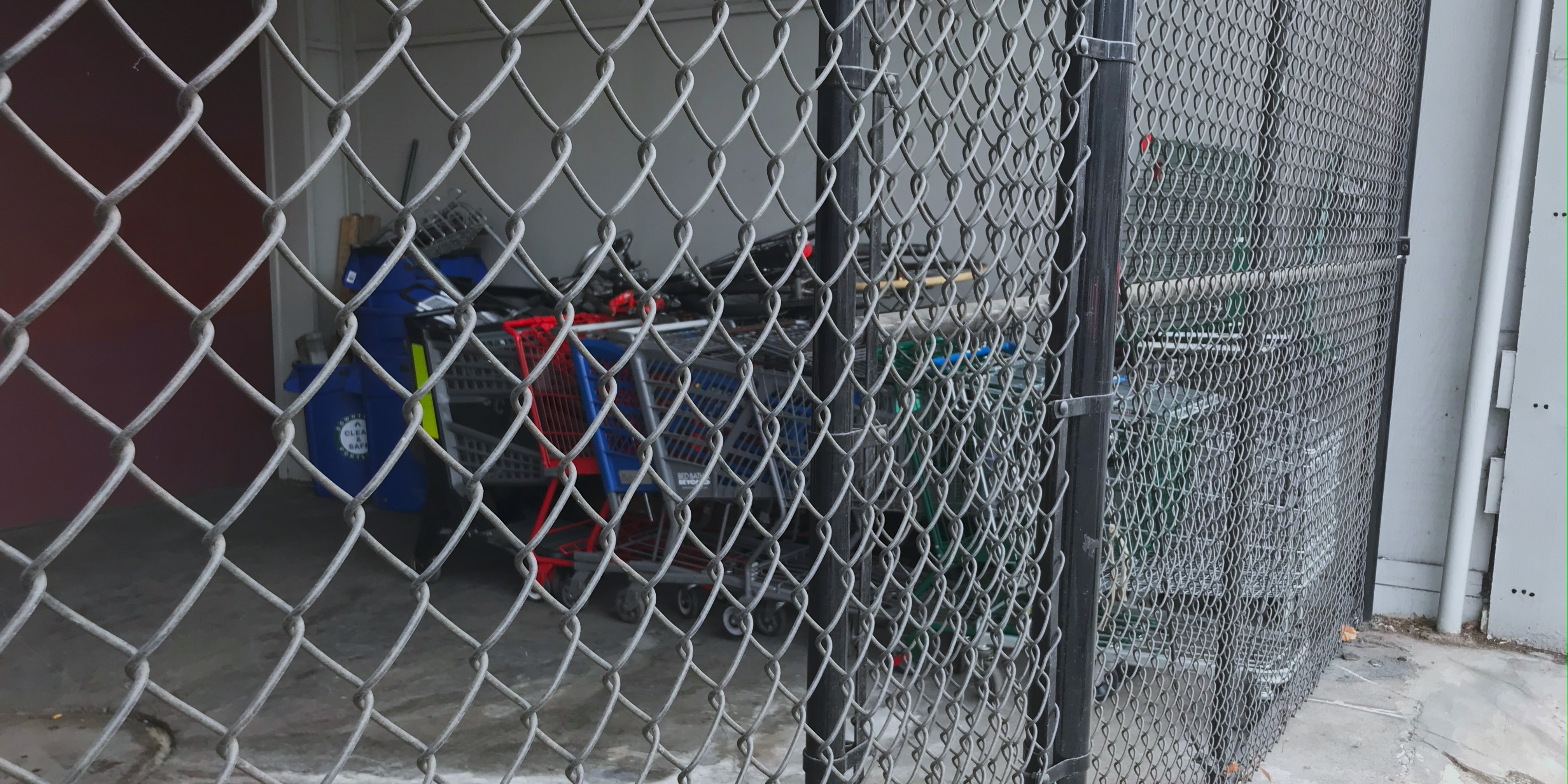
HUD's annual survey counted roughly 653,000 homeless Americans in 2023. Even if that count were off by half, there would still be over a million more carts stolen every year than there are people in the entire US homeless population. Your carts are not all going to encampments. Some are — but that's not the source of a rampant theft problem. Having tracked carts through most major US cities, here's where they actually turn up.
Schools. College and high school campuses both, housing or not. Students without cars treat carts as the default way to get stuff home.
Senior living and care homes. If you're near one, your two-tier express carts are there right now — they make popular walkers, and they come back to the store with their shoppers on repeat trips.
Construction sites. Crews buy lunch, take the cart back to the site, and put it on tool duty. This one was invisible until tracking caught it happening daily.
Hotels, apartments, and condos. Visitors and residents without cars use carts as transport. Some retailers use route-history data showing repeat cart visits to specific buildings to get property managers — or authorities — engaged.
Abandoned and vacant homes. Carts hop between residential properties, and these stops usually involve other illicit activity. Cart location data has more than once been the thread that pulled a larger case together.
Illicit warehouses. Especially in port cities, carts surface at storage sites for stolen goods — cart theft riding along with organized retail crime.
Scrap yards and municipal collection. Garbage and recycling services sweep carts off streets and rarely report it. Scrappers collect them for metal. Quietly, constantly.
Knowing the destinations is a prerequisite for getting carts back. QuickTrack shows you every off-property cart and routes the retrieval — no guessing required.