Track, Don't Lock

How Locking Wheels Actually Get Defeated

By Kyle Payne · January 10, 2024 · 5 min read
Post hero image alt text

Locking wheel systems have been around for 25 years. Carts keep leaving anyway. Here's exactly how — from people who have tracked thousands of them. FMI reported 2 million carts stolen annually in the US back in 2006. Nobody has run the study since, and most retailers we talk to believe today's number is higher — often at stores that already paid for a locking system. That's not a coincidence. Here's how carts beat the lock, ranked by how often we see it in tracking data.

  • Find a gap in the line. Most stores only bury the perimeter line across the main lot. Carts leave through the back — receiving doors, DSD deliveries, employee shuttling — and once a cart is behind the store, there's no line left to cross.

  • Pick the cart up. Locking wheels rely on short-range radio. Lift the cart over the line — a two-person job at most — or toss it in a pickup bed, and the system never knows it left. In one tracked sample, 40% of off-property carts appear to have left in a vehicle. A buried line does nothing against a truck.

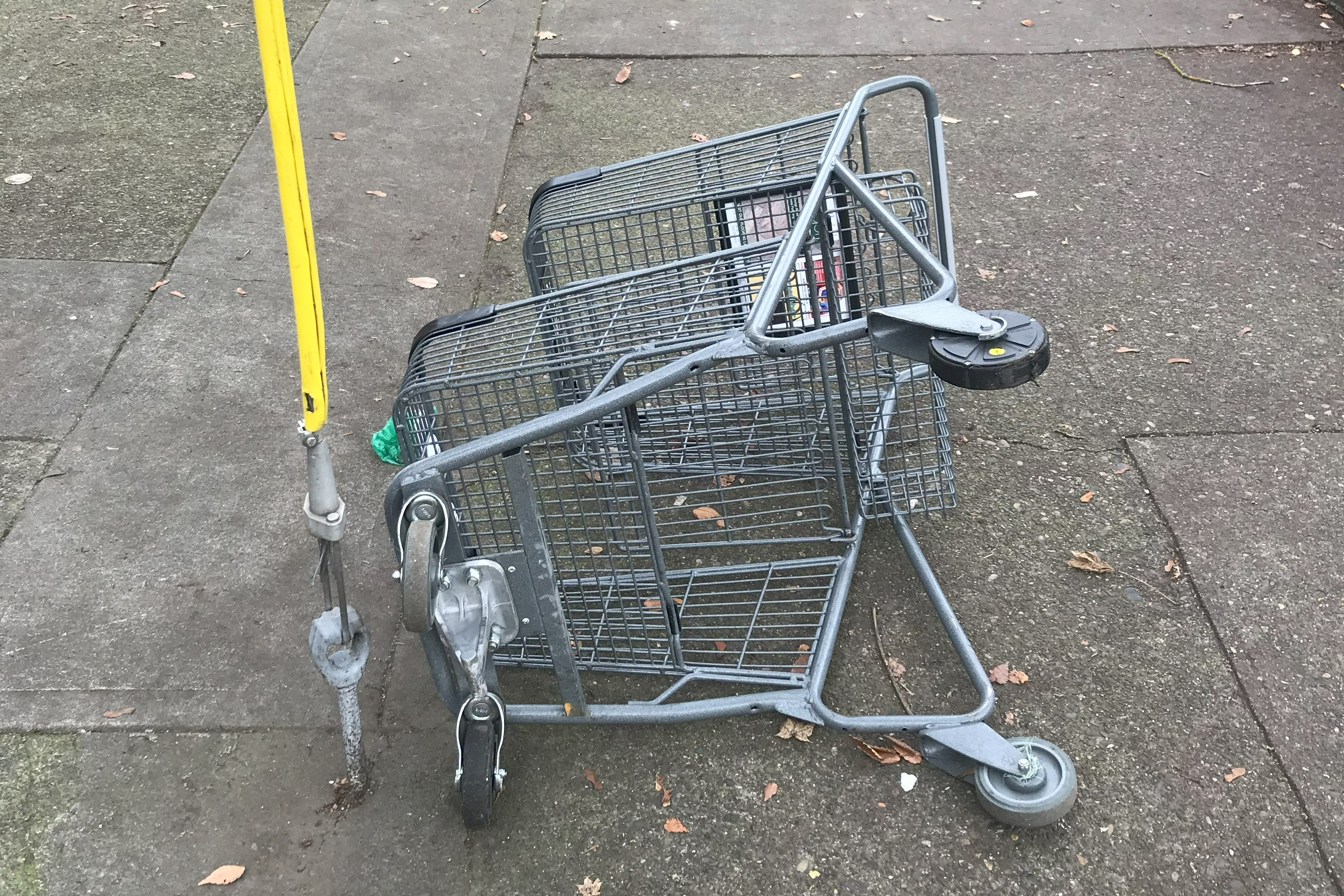
  • Just keep pushing. A locked wheel has almost no tread. Push it long enough and it develops a flat spot, and then the cart rolls surprisingly well. Now the cart is gone and you owe a replacement wheel if it ever comes back.

  • Swap the wheel. Seasoned cart thieves carry a wrench and a spare standard wheel. Unbolt, swap, gone — and the locking wheel gets resold.

  • Wait for the system to break. Line breaks, transponder faults, and power outages take the whole perimeter down. Wheel swaps get reinstalled in the wrong position, next to the anti-tip bracket instead of opposite it. Every maintenance gap is an open gate.


    The pattern: every defeat works because the system only guards a line in the pavement. Nothing about a locking wheel tells you a cart left, where it went, or how to get it back.

    Tracking flips the problem. Instead of betting everything on a perimeter that can be lifted over, driven past, or pushed through, you know where every cart is — on the lot or 50 miles from it — and retrieval becomes a routed run instead of a neighborhood search. See the full comparison at STG vs locking wheels, or dig into how QuickTrack handles the carts that were never going to stay put.

  • Liked this?

    Get the next one in your inbox.

    Weekly. No marketing pitch. Unsubscribe anytime.

    Subscribe →

    More from the blog?