
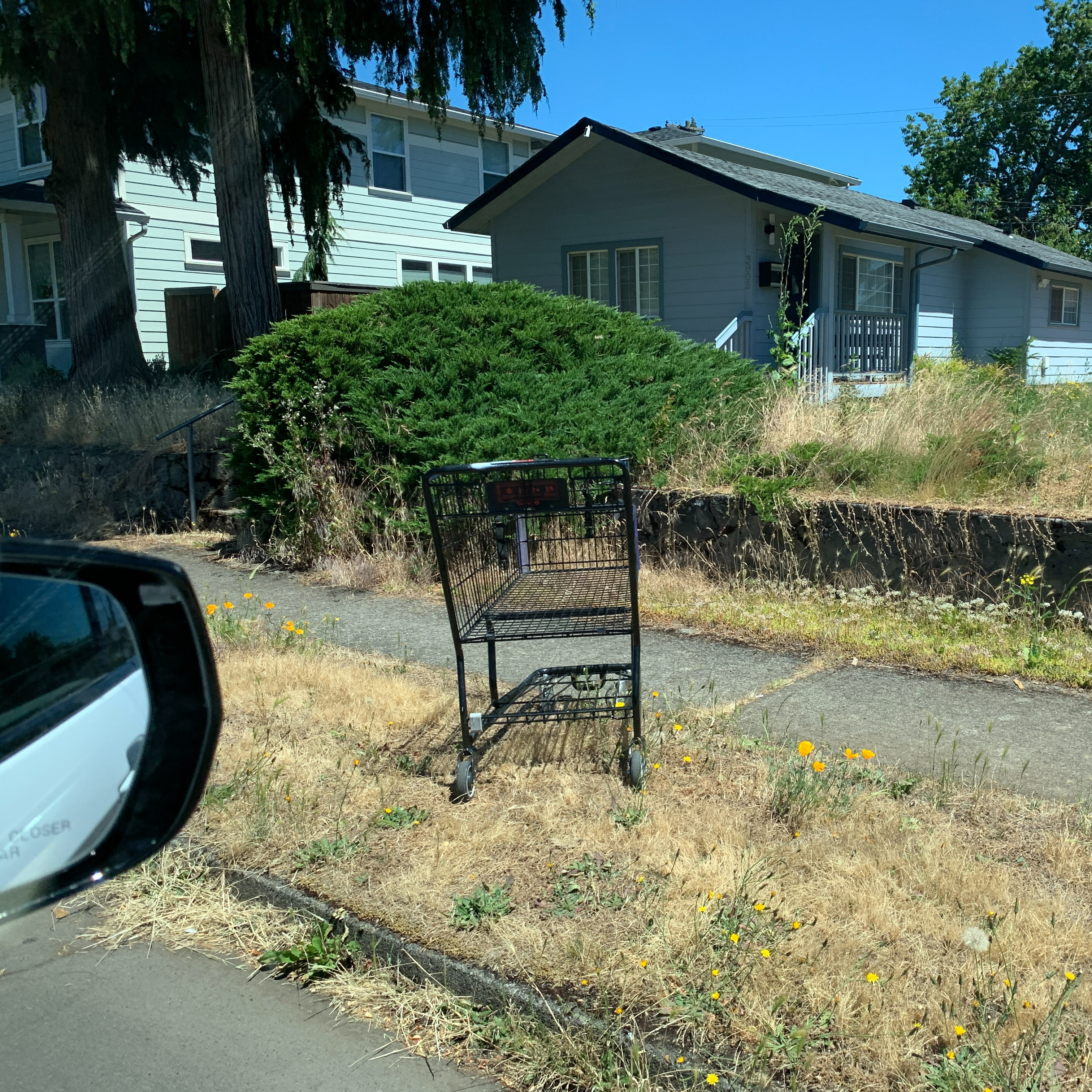
Loose carts trigger city ordinances, and city ordinances put the burden — especially the financial burden — on the retailer. Cart theft itself is usually a misdemeanor with minimal enforcement against the person who took the cart. The retailer, meanwhile, gets a compliance checklist. Across the 60+ municipal ordinances we track in 19 states, the same components repeat:
Signage and identification. Warning signs on premises, plus retailer ID and contact info on every cart — required largely because carts look alike and cities need to know who to bill.
Containment or retention measures. Physical barriers, poles, security staff, coin locks, locking wheels — and almost always a catch-all: "other solutions so long as their effectiveness can be proven."
Retrieval plans and time windows. Most cities require a documented retrieval capability, whether in-house or contracted, with a recovery window that generally falls between 48 and 72 hours of a cart being found off-property.
A plan on file. Filed with the enforcing office, updated regularly, producible on request.
Fees when the city collects for you. Usually triggered after a time window passes or a threshold number of carts is collected in a rolling period. This is where it gets expensive — and contentious, since retrieval contractors generally can't know how long a cart has been out.
Here's the part worth reading twice: "effectiveness must be proven" cuts both ways. Phoenix's own collection data showed that 50% of carts the city collected belonged to two retailers — who had locking wheels at over 66% of their stores. Containment didn't prove effective. What does prove effective, in writing, automatically, is a tracked fleet: timestamped recovery logs, response times inside the window, and evidence the city can't argue with.
Check your cities on the STG ordinance map, then see how QuickTrack turns the compliance file into a byproduct of normal operations.