
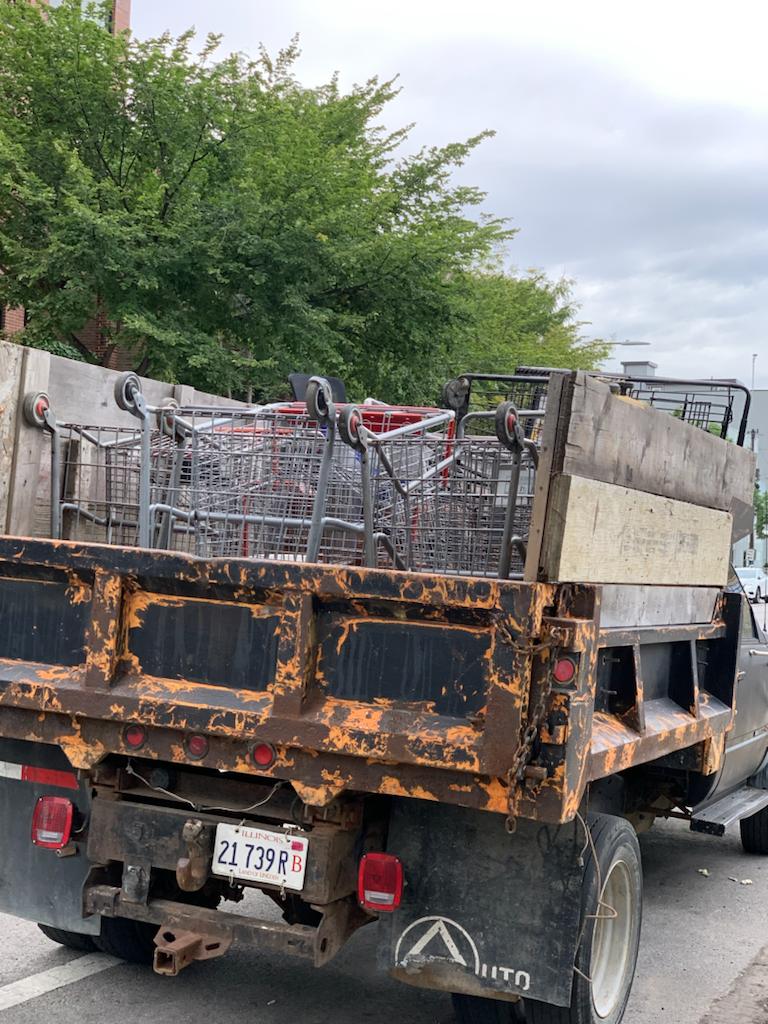
Farther than your locking wheels think. Average off-property cart: 2.5 miles out. Furthest we've tracked: 819 miles.
Shopping carts are built for the long haul — literally. Some get pushed straight home. Others get scooped into trucks and trailers and turn up counties away within hours. The carts that travel farthest are frequently tied to other criminal activity, which makes their route history more valuable than the cart itself.
In one random sample of ten tracked off-property carts: five sat at residential properties (two of those linked to other offenses), three at industrial sites, one at a church, one at another retailer. None — zero — were at bus stops or encampments, and the route histories show they never even paused at one on the way.
What that means if you're a retailer or a municipality writing policy:
Retrieval beats guessing. Most carts weren't in "known" cart-theft spots. Without location data, your retrieval crew is driving a grid and hoping.
Vehicles beat locking wheels. Roughly 40% of the sample left in a truck or trailer. No buried line has an answer for that.
Street carts are the visible fraction. Most of what you're losing can't be found on a casual drive around the block.
LP teams get a new tool. Cart route history has supported investigations well beyond the carts themselves.
This is also why range matters when you pick a tracking technology. Short-range systems stop working at the parking lot. QuickTrack runs on global cellular coverage with no range limit — the 819-mile cart above was still reporting when it was recovered. See how the technologies compare.